Showing posts with label Person of Interest. Show all posts

Tuesday, September 16, 2014

Person of Interest Day 3

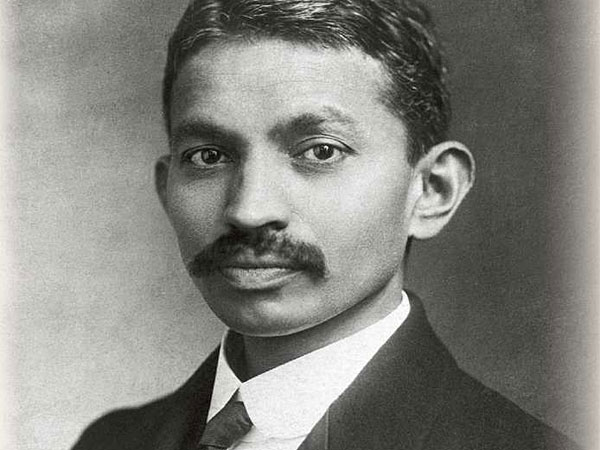
Mahatma Gandhi 


Born on October 2, 1869, in Porbandar, India, Mahatma Gandhi studied law and came to advocate for the rights of Indians, both at home and in South Africa. Gandhi became a leader of India's independence movement, organizing boycotts against British institutions in peaceful forms of civil disobedience. He was killed by a fanatic in 1948.

Spiritual and Political Leader

Indian nationalist leader Mohandas Karamchand Gandhi, more commonly known as Mahatma Gandhi, was born on October 2, 1869, in Porbandar, Kathiawar, India. He studied law in London, England, but in 1893 went to South Africa, where he spent 20 years opposing discriminatory legislation against Indians. As a pioneer of Satyagraha, or resistance through mass non-violent civil disobedience, he became one of the major political and spiritual leaders of his time. Satyagraha remains one of the most potent philosophies in freedom struggles throughout the world today.

Fight for Indian Liberation

In 1914, Gandhi returned to India, where he supported the Home Rule movement, and became leader of the Indian National Congress, advocating a policy of non-violent non-co-operation to achieve independence. His goal was to help poor farmers and laborers protest oppressive taxation and discrimination. He struggled to alleviate poverty, liberate women and put an end to caste discrimination, with the ultimate objective being self-rule for India.
Following his civil disobedience campaign (1919-22), he was jailed for conspiracy (1922-24). In 1930, he led a landmark 320 km/200 mi march to the sea to collect salt in symbolic defiance of the government monopoly. On his release from prison (1931), he attended the London Round Table Conference on Indian constitutional reform. In 1946, he negotiated with the Cabinet Mission which recommended the new constitutional structure. After independence (1947), he tried to stop the Hindu-Muslim conflict in Bengal, a policy which led to his assassination in Delhi by Nathuram Godse, a Hindu fanatic.

Death and Legacy

Even after his death, Gandhi's commitment to non-violence and his belief in simple living—making his own clothes, eating a vegetarian diet and using fasts for self-purification as well as a means of protest—have been a beacon of hope for oppressed and marginalized people throughout the world.

"Mohandas Karamchand Gandhi." Bio. A&E Television Networks, 2014. Web. 16 Sep. 2014

Monday, September 15, 2014

Person of Interest Day 2

Matthew Pil­lis­cher grad­u­ated in 2000 from Ben­ning­ton Col­lege with a degree in film­mak­ing. In 2010 he grad­u­ated from Tem­ple Uni­ver­sity Beasley School of Law and is now a licensed attor­ney in PA and NJ. Matt worked as a staff attorney at Community Legal Services in Philadelphia, helping people with problems due to their criminal records. In the 10 years between col­lege and law school, Matt worked in var­i­ous jobs as a restau­rant and retail worker, a farm­hand, and a social worker. An artist at heart, Matt always cre­ated movies, plays, paint­ings, music, and other art on the side. Dur­ingthe lead-up to the 2003 inva­sion of Iraq and wit­ness­ing the poverty, police bru­tal­ity, and racism liv­ing in Cincin­nati, OH, Matt became deeply politi­cized by the events going on around him. He became an activist and worked with var­i­ous groups and indi­vid­u­als against racism and poverty, for work­ers' rights, women's and LGBT rights, and against mil­i­tary conquest.
Matt entered law school with an eye towards under­stand­ing the legal sys­tems that per­pet­u­ate the unjust sta­tus quo, and also hoped to use law as a way to help lib­er­ate poor and work­ing peo­ple. Matt con­tin­ued mak­ing music and movies through­out law school, par­tic­i­pated in activism in Philly and beyond, and dur­ing his last year of law school he began work on a movie about the Philadel­phia Prisons.
Through an intern­ship with the civil rights firm, Kairys, Rudovsky, Mess­ing & Fein­berg, Matt worked on a law­suit against the Philadel­phia Prison Sys­tem for over­crowd­ing con­di­tions. He inter­viewed inmates and inves­ti­gated some of the con­di­tions in the pris­ons. The sum­mer before, he had worked with PA Insti­tu­tional Law Project, a non-profit that serves the insti­tu­tion­al­ized pop­u­la­tions in PA, advo­cat­ing for pris­on­ers' rights. These expe­ri­ences, along with his­tory and polit­i­cal the­ory he had learned as an activist, focused his life's work on prob­lems within the prison and crim­i­nal jus­tice systems.
Matt was lucky enough to meet other stu­dents at Uni­ver­sity of Penn­syl­va­nia Law School who were inter­ested in the issue and col­lab­o­rated on the movie at var­i­ous stages. What started as a 15 minute video on local over­crowd­ing issues has become a fea­ture doc­u­men­tary that takes on the entire crim­i­nal jus­tice sys­tem. It would not have been pos­si­ble with­out all the won­der­ful peo­ple who helped along the way, par­tic­u­larly co-producers, Neal Swisher, Agatha Koprowski, and Karly O'Krent, and the movie's interviewees.

Sunday, September 14, 2014

Person of Interest Day 1

Michelle Alexander

Michelle Alexander is a highly acclaimed civil rights lawyer, advocate, and legal scholar. In recent years, she has taught at a number of universities, including Stanford Law School, where she was an associate professor of law and directed the Civil Rights Clinics. In 2005, she won a Soros Justice Fellowship, which supported the writing of The New Jim Crow, and that same year she accepted a joint appointment at the Kirwan Institute for the Study of Race and Ethnicity and the Moritz College of Law at The Ohio State University. Since its first publication,The New Jim Crow has received rave reviews and has been featured in national radio and television media outlets, including MSNBC, NPR, Bill Moyers Journal, Tavis Smiley, C-SPAN, and Washington Journal, among others. In March, the book won the 2011 NAACP Image Award for best nonfiction.
Prior to entering academia, Alexander served as the director of the Racial Justice Project for the ACLU of Northern California, where she coordinated the Project’s media advocacy, grassroots organizing, coalition building, and litigation. The Project’s priority areas were educational equity and criminal justice reform, and it was during those years at the ACLU that she began to awaken to the reality that our nation’s criminal justice system functions more like a caste system than a system of crime prevention or control. She became passionate about exposing and challenging racial bias in the criminal justice system, ultimately launching and leading a major campaign against racial profiling by law enforcement known as the “DWB Campaign” or “Driving While Black or Brown Campaign.”
In addition to her nonprofit advocacy experience, Alexander has worked as a litigator at private law firms including Saperstein, Goldstein, Demchak & Baller, in Oakland, California, where she specialized in plaintiff-side class-action lawsuits alleging race and gender discrimination.
Alexander is a graduate of Stanford Law School and Vanderbilt University. Following law school, she clerked for Justice Harry A. Blackmun on the U.S. Supreme Court and for Chief Judge Abner Mikva on the U.S. Court of Appeals for the D.C. Circuit. She currently devotes much of her time to freelance writing; public speaking; consulting with advocacy organizations committed to ending mass incarceration; and, most important, raising her three young children—the most challenging and rewarding job of all.

Person of Interest

I am going to be research different people who are making a difference in our country.  You never know a person's story until you ask. I am going to call it "Person of Interest" Making a Difference.

I want to put an emphasis on the Brown people I put on here. It is often the Brown success is over powered by the negative image that has been depicted from stereotypes.