Sunday, March 2, 2014

Bill Gates Rules

Bill Gates is by far one of the most innovative people in history to me. He has been enhancing technology a lot for more than 30 years. He is very intelligent, he went to Harvard!


Where were you first introduced to computers?

School introduced me to something new and I fell in love with computers, in 1993. It was a Macintosh and in 1997 I fell in love with Windows platforms in school. I got my first computer that year too. I have never looked back.


Clinton documents: Much has changed, but much still the same


STORY HIGHLIGHTS
  • Newly released Clinton papers detail health care battle of 1990s
  • Public gets a new look at inner workings of the Clinton White House
  • Several thousand pages of documents released in a first batch
  • Hillary Clinton is now a potential presidential contender in 2016


Read the full story at CNN

Same ole, same ole


Walker Worthy for Mayor Trenton, NJ

This is one of 8 mayoral candidates for Trenton New Jersey upcoming mayoral race.  


AT A GLANCE
  • Born in Trenton in 1963 to Walker M. Worthy Sr. and Jerlene “Cookie” Humphries Worthy.
  • Graduated from Tennessee State University; B.A., History.
  • Appointed Deputy Clerk of Mercer County, the first African-American to hold that position. Worked as an educator at Trenton Public Schools. Served as a legislative aide in the New Jersey General Assembly.
  • Attends Shiloh Baptist Church; serves on the Board of Trustees.
  • Member of the NAACP, Tennessee State University Alumni Association, Correctional Officers Association of New Jersey, and National Education Association; Chair of the Mercer Pan Hellenic Council, Kappa Alpha Psi fraternity; Vice-Chair of the Trenton Public Education Foundation.


To read more information about Walker Worthy, go to  Worthy 4 Mayor


Bipartisanship

Bipartisanship is a political situation, usually in the context of a two-party system, in which opposing political parties find common ground through compromise, in theory. It has been debated among political theorists however that in practice, each party advances their own political agenda at the expense of the other party because of the conflicting ideologies.  


According to political analyst James Fallows in The Atlantic, bipartisanship is a phenomenon belonging to a two-party system such as the political system of the United States and does not apply to a parliamentary system such as Great Britain, since the minority party is not involved in helping write legislation or voting for it.[4] Fallows argues that in a two-party system, the minority party can be obstructionist and thwart the actions of the majority party.[4] However, analyst Anne Applebaum in The Washington Post suggested that partisanship had been rampant in the United Kingdom and described it as "a country in which the government and the opposition glower at each other from opposite sides of the House of Commons, in which backbenchers jeer when their opponents speak."[5] Applebaum suggested there was bipartisanship in Britain, meaning a coalition in 2010 between the opposing major parties, but that it remained to be seen whether the coalition can stay together to solve serious problems such as tackling Britain's financial crisis.[5]
Bipartisanship (in the context of a two-party system) is the opposite of partisanship which is characterized by a lack of cooperation between rival political parties.[6] Framer James Madison argued in the Federalist Papers that a danger to democracies were factions, which he defined as a group that pushed its interests to the detriment of the national interest. While the framers of theConstitution did not think that political parties would play a role in American politics, political parties have long been a major force in American politics, and the nation has alternated between periods of intense party rivalry and partisanship, as well as periods of bipartisanship. According to Robert Siegel of National Public Radio, there has been virtually no cooperation between Democrats and Republicans in the U.S. during the few years before 2010.[6]
Bipartisanship can also be between two or more opposite groups (e.g. liberal and conservative) to agree and determine a plan of action on an urgent matter that is of great importance to voters. This interpretation brings bipartisanship closer to the more applied notion of postpartisan decision-making; a solution-focused approach that creates a governance model with third-party arbiters used to detect bias.


For the rest of this article click here --> --> Wikipedia

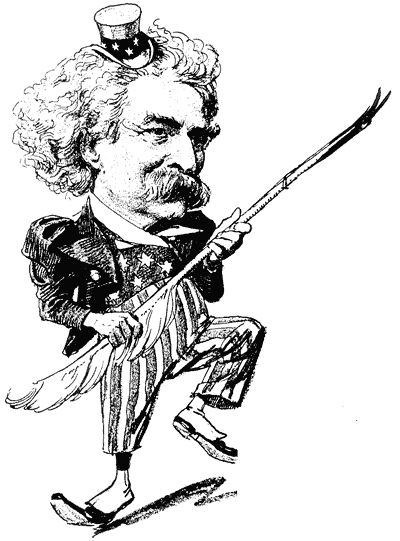
Activist by Mark Twain

  
 ...the citizen who thinks he sees that the commonwealth's political clothes are worn out, and yet holds his peace and does not agitate for a new suit, is disloyal; he is a traitor. 


- A Connecticut Yankee in King Arthur's Court